

As Puerto Rico’s Faith-Based Coordinator and Advisor to the Mayor of San Juan, Burgos has helped shape a model of collaboration between government and religious communities that is both distinctive and, in many respects, without precedent within a US jurisdiction.
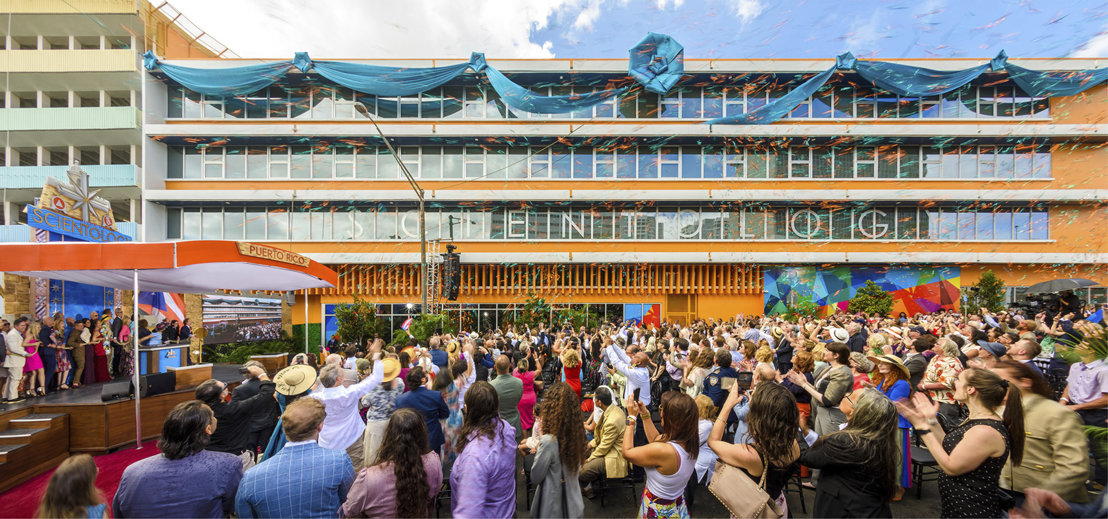
That work formed the backdrop to his appearance as a guest speaker at the February 22, 2026, grand opening of the Ideal Church of Scientology of Puerto Rico—the first of its kind in the Caribbean. Located in the cultural heart of Santurce, the new facility is designed not only for delivery of religious services, but as a hub for community engagement, humanitarian programs and interfaith cooperation.
At the celebration, Burgos described the new Ideal Org as “more than just a building,” calling it a place where communities can come together to reach their full potential. His broader vision is clear: to position Puerto Rico as a global model of partnership between government and faith—one grounded in sustained cooperation and measurable community impact.
You often speak about persistence. Where did that mindset come from in your personal life?
When I was a child, my family lived in a public housing complex in Puerto Rico. We were poor and depended on help from the government. My mother made all our clothes on a black, manual Singer sewing machine. I knew nothing about Christianity. Then, one day, a lady visited our home and began to talk to us about something that changed my life. She said, in Spanish, “No es culpa tuya haber nacido pobre”—“It’s not your fault to be born poor.” “Pero es culpa tuya si mueres pobre”—“but it is your fault if you die poor.”
That transformed my life. I said to myself that I was going to get out of my poverty and progress, and that I was going to help others understand the importance of having the faith to change their circumstances.
Your social media profile reads, “Insist, persist, resist and never give up.” How has that philosophy shaped your work?
It is a philosophy of life that I have found useful. When I began the faith-based initiative in Puerto Rico, nobody had such a program on the island because of the separation of church and state clause in the commonwealth’s constitution. Then in 2001, the first White House Office of Faith-Based and Community Initiatives was created to provide religious and community organizations federal funding for social services. In 2005, I opened the office of faith-based initiatives in Puerto Rico.
What gap did you see in the relationship between government and religious organizations that convinced you such an office was necessary?
The government has social welfare programs like food stamps for certain sections of the population. But the programs don’t do much for people in the long run because the relief they get is temporary. In 1996, a national welfare reform act was passed to move people from welfare to work. The act allowed agencies to work with faith-based groups to help people with that transition. That was a big step.
You spent more than two decades as an ordained Seventh-day Adventist pastor before moving into government work. What first led you to believe that faith communities should play a more direct role in public service and civic life?
Faith communities are the first responders in helping people in need and transforming lives. The government only gives materials—it doesn’t give faith. But when the government works with faith-based groups, it can transform people’s lives. Spirituality creates better human beings.
When you first proposed building a formal bridge between government and faith communities, did you encounter any skepticism or resistance?
I got lots of resistance because of the separation of church and state doctrine. I was called crazy. But I said that the office of faith-based initiatives in Puerto Rico is not going to be a religious office. It’s going to be an office of faith or spirituality—of values that will be a bridge between the government and religions to work together.
Looking back now, what were the most important lessons you learned from those early years of building the framework?
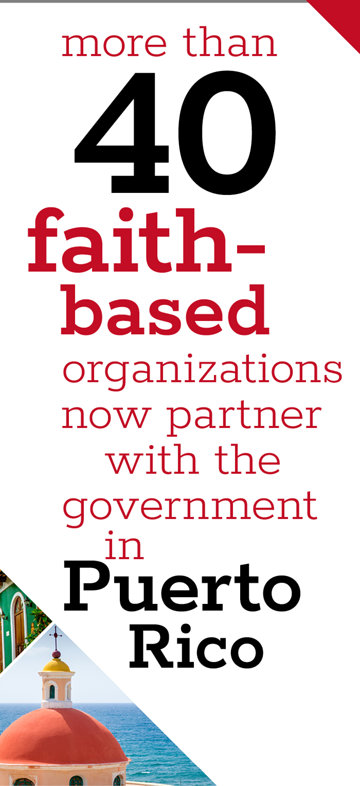
I learned that we have to go to the grassroots level, because it’s only the people who can be true agents of change—who can do things the government cannot do. And thank God for the success of the initiative, because today more than 40 faith-based organizations are partnering with the government in Puerto Rico, which is notable for any jurisdiction in the country. The big lesson we learned is that we have to insist, persist and work.
Puerto Rico is home to a wide range of religious traditions. How does the island ensure that government partnerships remain inclusive and respectful of its diverse faith communities?
Last year, the governor signed an important new law called the Puerto Rico Fundamental Right to Religious Freedom Act. The law prohibits discrimination on the basis of faith and strengthens existing constitutional protections for religious freedom.
As part of that broader effort to partner with faith-based organizations, you first became familiar with the Church of Scientology through its humanitarian initiatives. What stood out to you about them?
The Church has programs that we need because we are always working with people and rebuilding communities. It has programs on education, ethical awareness, personal development and the universal principles of human rights. As Mr. L. Ron Hubbard said, “Human rights must be made a fact, not an idealistic dream.”
The new Ideal Organization is like a beacon. It is good for all the people in Puerto Rico. The Church serves not only Scientologists, but it works with the broader community.
Based on your own life and the work you’ve done in communities, what advice would you give to today’s youth?
If I could give one piece of advice to young people, it would be this: Never allow your circumstances to define your future. I did not grow up in perfect conditions—I was poor, I had nothing. But I learned that your destiny does not determine where you go. You have to believe in yourself and be willing to keep moving forward with purpose, discipline and persistence. Stay grounded in your faith and your values, invest in your personal growth and knowledge. Your character will take you farther than your talent ever could. Because success in life is not only about what you achieve, but about how many lives you can impact along the way.
How would you hope people describe you and the impact you’ve had on their lives?
I would like to be remembered as a bridge—someone who connected faith with community to bring hope wherever it was needed most. I hope people will say that I helped open doors for others, created opportunities where there were none, and remained faithful to my purpose in the face of challenges. Above all, I want my legacy to reflect that serving others is the highest calling—that success is measured not by what we gain but by what we give.