

The count is more than double the 20 million US influenza infections recorded during the 1918 pandemic, and second only to the nation’s worst outbreak, COVID-19, a century later.
This contagion isn’t viral, but chemical: some 57 million Americans under the influence of one class of psychotropic drugs.
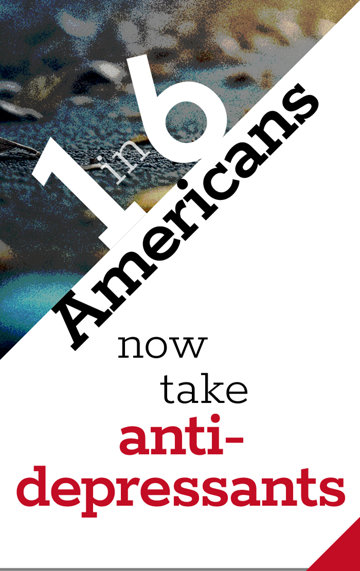
That means one in six now takes antidepressants—substances that alter brain function, mood, perception, consciousness, cognition and behavior.
“Our goal is straightforward: to reduce unnecessary dependence on medication, to improve patient outcomes and to return control to the patients,” Kennedy said.
The nonprofit mental health watchdog Citizens Commission on Human Rights (CCHR) has been warning the public about such drugs for decades, documenting their catastrophic effects—everything from heart problems and seizures to emotional numbness and sexual dysfunction, uncontrollable movements of the limbs and body, depleted white blood cells, loss of consciousness, coma and suicide.
Unlike the pandemics it now rivals in scale, this one was marketed—backed by more than $6 billion in direct-to-consumer advertising in 2020 alone.
Now, for the first time, the federal government is taking a stand against it.
On May 4, Department of Health and Human Services (HHS) Secretary Robert F. Kennedy Jr. launched a nationwide campaign urging the “deprescribing” of psychiatric drugs—a direct response to what Kennedy presents as a growing national dependency crisis.
The announcement was made at a Mental Health and Overmedicalization Summit organized by the Make America Healthy Again Institute.
“Our goal is straightforward: to reduce unnecessary dependence on medication, to improve patient outcomes and to return control to the patients,” Kennedy said.
But restoring control to patients means confronting what many say they were never warned about: the ordeal of getting off the drugs. Former antidepressant users have described the agony of trying to withdraw from psychotropics. They report surges of anxiety, electric “brain zap” sensations, sudden mood swings, crippling muscle spasms, weeping, terror and plunges into “black holes of pure dread.”
Psychiatrists told them their withdrawal symptoms meant their mental illness had returned—not that the drugs were responsible—and that they must resume the drugs or take more to address these “new” symptoms.
“I happen to be an actual expert, because I was addicted to heroin for 14 years,” Kennedy said. “I was constantly getting off it, and then came back on. I went through withdrawal probably 100 times,” he added. “You just have to steel yourself for 72 bad hours.”
Kennedy then described the far longer ordeal of antidepressant withdrawal. An unnamed family member, he said, “was suicidal, literally every day” when she stopped taking the drug. “That’s heartbreaking to hear from a family member,” he said. “And I’ve heard that from hundreds, hundreds of people, the same story again and again.”
After years on antidepressants—many of which are designed to alter serotonin levels in the brain—the brain and body may struggle to readjust when the drugs are reduced or stopped. Serotonin is involved in mood, sleep, digestion, wound healing and body temperature—one reason withdrawal can produce a constellation of agonizing symptoms even when patients taper gradually.
The HHS initiative does more than acknowledge that danger. It begins to change the financial machinery that has long rewarded prescribing, but not the time-consuming work of getting patients safely off these damaging drugs.
Through the Centers for Medicare & Medicaid Services (CMS), HHS has now unveiled a new payment mechanism that allows clinicians to be reimbursed for the extra hours spent guiding patients through the difficult, often dangerous process of withdrawing from psychiatric drugs.
Anne Goedeke, president of the CCHR National Affairs Office, applauded the initiative. “These actions by HHS are an extremely important step forward in correcting the nearly sole reliance on psychiatric drugs as mental health treatment—drugs which the latest scientific research finds do more harm than good—and advancing awareness and the ‘prescribing’ of effective nondrug approaches to improving mental health.”
For the first time, the machinery that helped keep Americans on psychiatric drugs is being turned toward getting them off—offering suffering patients not another prescription, but a genuine path to recovery and freedom.