

An herbal extract from the leaves of the Southeast Asian tree Mitragyna speciosa, kratom contains psychoactive compounds that, when synthetically concentrated as 7-Hydroxymitragynine (7-OH), can produce opioid-like effects and pose a high overdose risk.
Kratom is marketed as, among other things, a pain reliever and an all-natural nostrum to aid those recovering from opioid addiction. Books with titles like Kratom is Medicine, Kratom Now! Your Guide to The New Legal High and Essential Tools for Growing Kratom in Small Spaces are all available from Amazon.
“Kratom and 7-OH products are sold as natural remedies, but they are illegal and unsafe.”
Joe Rogan, Montel Williams and Blink-182’s Travis Barker, among other celebrities, swear to the benefits of kratom, with Williams partnering with a kratom company to champion the product.
But in just the past few months, six overdose deaths in Los Angeles County among people aged 18 to 40 have been tied to 7-OH ingestion.
“Kratom and 7-OH products are sold as natural remedies, but they are illegal and unsafe,” said Dr. Muntu Davis, Los Angeles County Health Officer. “At lower doses, 7-OH acts like a stimulant and at higher doses, it acts like an opioid. Mixing or using it with alcohol, prescription drugs or illicit substances can significantly slow breathing and lead to death.”
The substance has also been known to cause rapid heartbeat, confusion, hallucinations and psychosis.
Against this backdrop, on November 7, 2025, the Los Angeles County Department of Public Health advised retailers to immediately stop selling products that contain kratom and 7-OH.
Those retailers include gas stations, smoke shops and other venues in the county that sell tablets, powders, gummies, tea leaves, drink mixes and concentrated liquid extracts or shots of kratom and 7-OH. Often labeled “plant alkaloid” and promoted as dietary supplements, the sale of these products is unregulated, making accidental overdoses more likely, according to Davis.
Health officials this month will conduct inspections at establishments to ensure the substances are not being sold. Stores that don’t comply with the ban could face fines and other penalties.
Describing 7-OH as a “dangerous, illegal” opioid, the FDA sent advisories this past July to local public health departments as well as warning letters to companies that allegedly market the compound illegally. “7-OH is not lawful in dietary supplements and cannot be lawfully added to conventional foods,” the FDA wrote in a statement. “There are no FDA-approved drugs containing 7-OH and it is illegal to market any drugs containing 7-OH. Consumers who use 7-OH products are exposing themselves to products that have not been proven safe or effective for any use.”
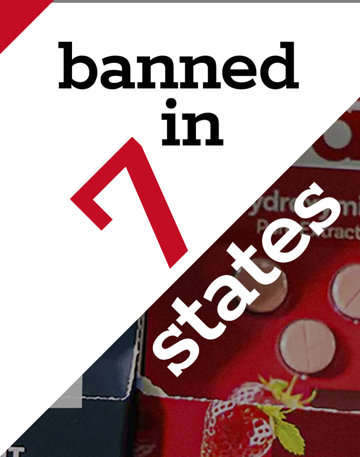
As awareness grows of the danger of the herbal extract and its synthetic derivative, so too does regulation. Kratom and 7-OH are currently banned in seven states and at least 18 have some form of regulation in place.
Tragically for Ethan Pope, the sale of kratom is legal in Georgia.
Two years after the death of her son, Dana Pope stood by the state’s governor as he signed a new bill, severely restricting the sale of kratom. “It makes us feel that [Ethan] didn’t die in vain and that he will make a difference in this world,” she said. “If he saves one person who now can’t buy kratom or puts the word out that kratom can kill you, then it’s a good day.”
Ethan’s parents had no idea how long their son had been using the drug, but they came across a to-do list when sorting out his apartment in the wake of his passing.
One item stuck out: STOP TAKING KRATOM.